Tina Butler · 13 September 2026
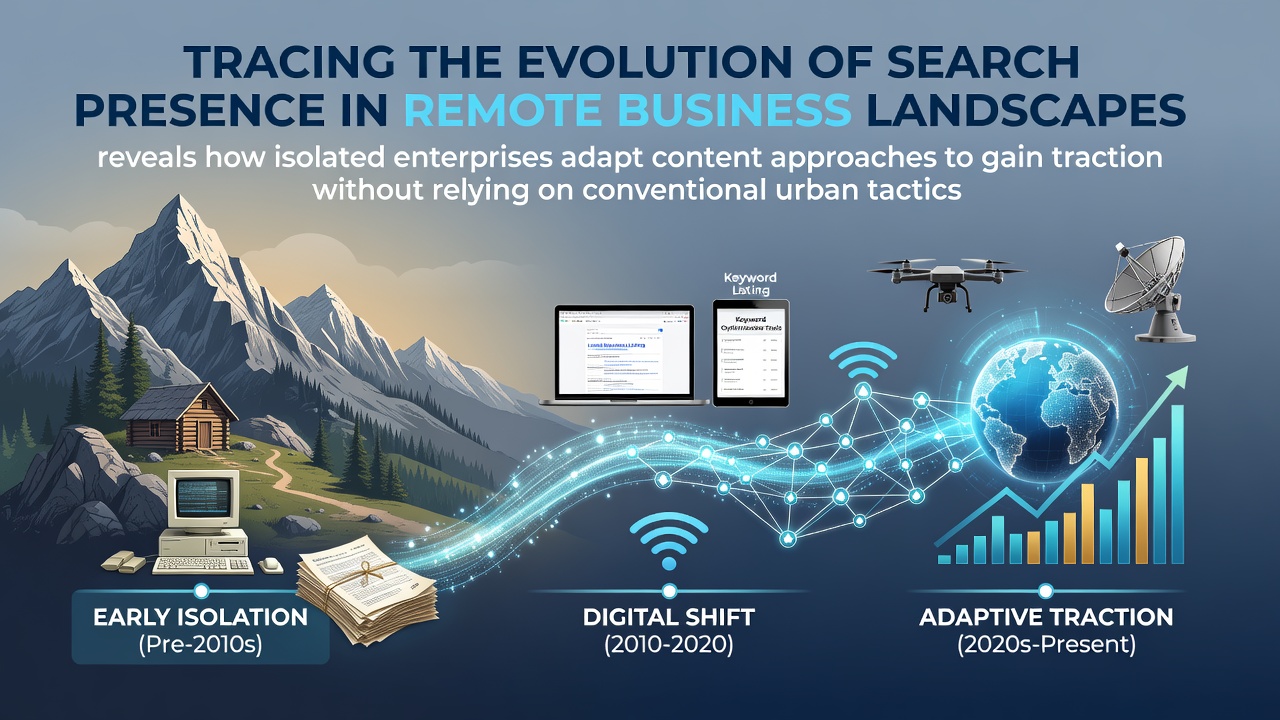
Tracing the Evolution of Search Presence in Remote Business Landscapes reveals how isolated enterprises adapt content approaches to gain traction without relying on conventional urban tactics
Remote enterprises have shifted their focus toward specialized content methods that leverage regional characteristics instead of broad metropolitan approaches; data from multiple studies indicates these adjustments have produced measurable gains in search visibility for businesses located far from major population centers. Researchers at institutions tracking digital adoption patterns note that isolated operations often prioritize hyper-local terminology, community-generated material, and platform-specific formats suited to limited connectivity environments.
Early phases of this evolution centered on basic website establishment with minimal optimization, yet by the mid-2010s enterprises began incorporating location-based signals more systematically. Figures from government statistical agencies reveal that rural business internet usage rates climbed steadily, prompting adjustments in how content addressed search engine algorithms. Those tracking these changes observe that conventional urban tactics such as dense keyword clustering and high-volume paid promotions proved less effective when audience reach depended on narrower geographic queries.
Regional Data Patterns and Early Adaptations
Statistics compiled by the Australian Bureau of Statistics show rural business digital engagement rising through targeted content that highlighted local supply chains and seasonal offerings, while similar patterns emerged in Canadian rural sectors according to reports from Statistics Canada. Isolated enterprises discovered that embedding references to nearby landmarks, regional events, and specialized services helped surface their pages in location-aware searches without competing directly against city-based competitors. This approach allowed smaller operations to build authority within niche result sets.
Content formats also diversified as enterprises tested shorter video segments and audio descriptions that performed better on variable bandwidth connections common in remote areas. Studies from the OECD on digital inclusion documented these format shifts correlating with improved engagement metrics in non-urban zones during the late 2010s and early 2020s. Observers note that such adaptations avoided reliance on high-speed urban infrastructure assumptions.
Content Strategy Refinements in Practice
By 2023 many remote businesses had integrated user-generated elements such as customer stories tied to specific locales, which search algorithms began rewarding through enhanced relevance scoring. One study revealed that incorporating these narratives alongside factual service descriptions increased time-on-page metrics in rural markets. Enterprises further refined approaches by mapping content to voice search patterns prevalent in areas with higher mobile dependency.
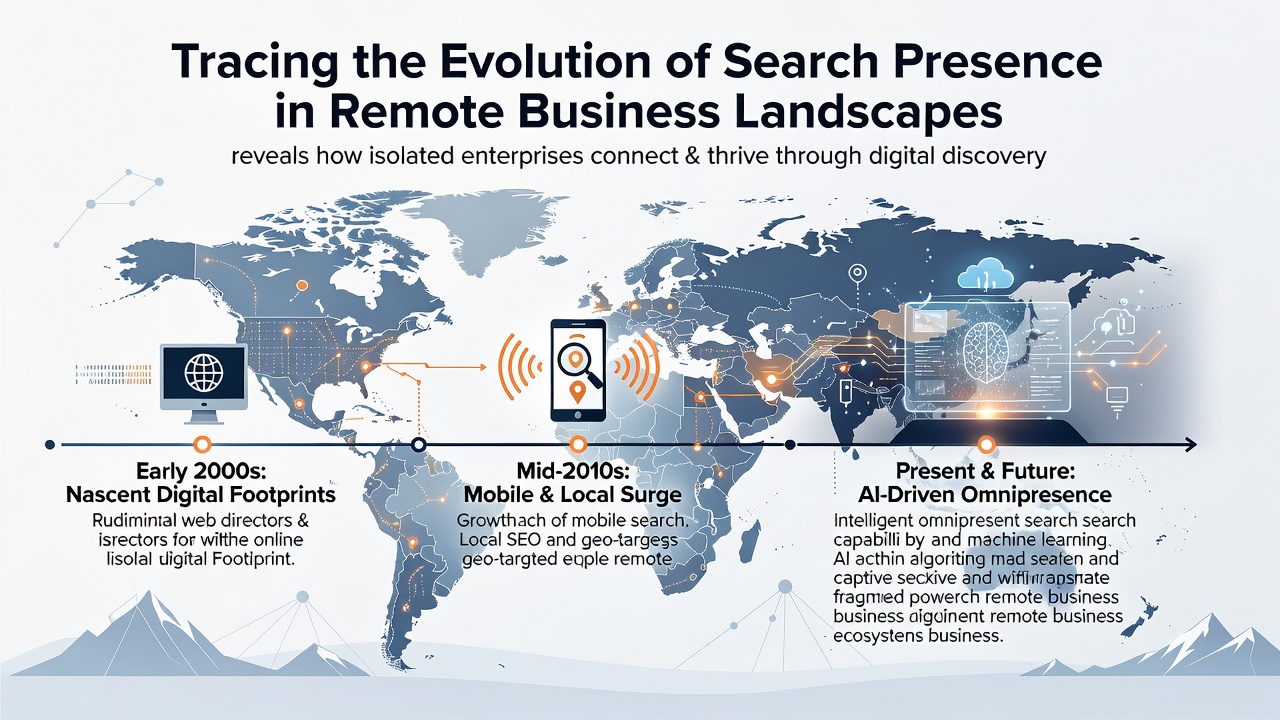
September 2026 brought additional insights when preliminary findings from an OECD rural economy update highlighted continued growth in organic search traffic for businesses employing these localized methods. The report linked sustained visibility gains to consistent use of community-focused material rather than imported urban frameworks. Enterprises in sectors such as agriculture, tourism, and specialty manufacturing demonstrated particular success when content addressed practical queries tied to weather patterns, regional festivals, and supply availability.
Platform and Algorithm Interactions
Search engine updates throughout the 2020s increasingly favored signals of authenticity and geographic specificity, which aligned well with adaptations already underway in remote settings. Data indicates that businesses maintaining detailed local resource pages and updating them with real-time regional information achieved stronger positioning compared to those using generic templates. Industry analyses from sources like the US Small Business Administration confirm that such practices reduced bounce rates while improving conversion from search referrals.
Isolated operations also experimented with multilingual content reflecting nearby border communities or indigenous language elements, expanding reach without expanding physical footprints. These efforts produced documented increases in international referral traffic according to aggregated analytics shared across research networks.
Conclusion
The trajectory shows remote enterprises continuing to refine content approaches around authentic regional signals and connectivity-aware formats, producing distinct search presence outcomes separate from metropolitan norms. Ongoing data collection from statistical bodies across regions supports the pattern of steady adaptation that prioritizes relevance within constrained audiences over broad competitive volume.