
Tina Butler · 27 September 2026
How Isolated Retailers Use Niche Directories to Strengthen Their Local Query Dominance
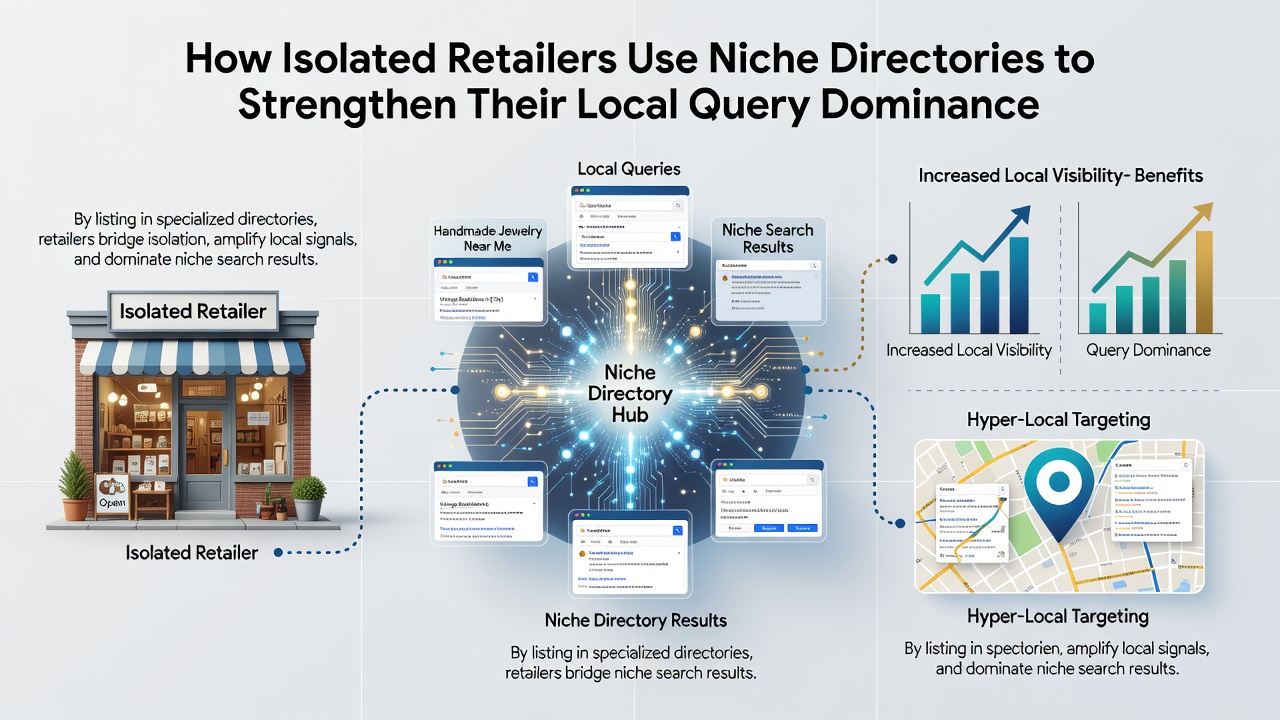
Isolated retailers in remote regions have turned to niche directories as a core method for improving visibility in local search results, and these platforms connect businesses with targeted audiences while bypassing the limitations of broad national listings. Data from multiple government agencies shows that small retailers in low-density areas achieve higher ranking consistency when their information appears in directories focused on specific industries or geographic clusters, and this pattern held steady through September 2026 according to updated rural commerce reports.
Defining Niche Directories in Retail Contexts
Niche directories operate as specialized online repositories that categorize businesses by industry subtype, local region, or product focus rather than serving as general search engines, and they often maintain tighter verification processes that signal trustworthiness to both users and algorithms. Retailers in isolated locations submit details such as operating hours, product specialties, and contact information to these platforms, which in turn generate structured data that search engines pull for local query results. Observers note that directories centered on sectors like agricultural supply, outdoor equipment, or regional crafts tend to attract higher engagement from nearby searchers compared with generic business aggregators, and this engagement feeds into ranking signals through consistent citations and review accumulation.
Studies conducted by national statistical bodies indicate that businesses listed in three or more niche directories see measurable lifts in local pack appearances, while those relying solely on broad platforms experience slower traction in rural queries. The process involves matching business attributes to directory categories that align closely with searcher intent, such as placing a remote hardware store under both "farm supply" and "regional tools" sections, and this dual categorization increases the chance of appearing when users combine location modifiers with product terms.
Implementation Steps Observed Among Remote Retailers
Retailers begin by identifying directories that serve their specific trade and surrounding counties, then they prepare consistent name, address, and phone data across submissions to avoid citation conflicts that dilute authority. Many coordinate listings with seasonal inventory updates, ensuring directories reflect current stock such as winter heating supplies or harvest equipment, and this timing aligns with predictable search volume spikes documented in regional retail analyses. Platforms that allow category tags and photo uploads receive priority attention because enriched entries generate more user interactions, which algorithms interpret as relevance signals.
Coordination with directory administrators for verification often includes providing local business licenses or utility records, and this step strengthens the directory's own credibility in the eyes of search engines. Retailers who maintain active profiles also respond to reviews posted through these channels, turning directory pages into ongoing communication points that accumulate additional content over time. Figures from the Australian Bureau of Statistics reveal that small retailers in outer regional areas increased their directory participation by notable margins between 2024 and 2026, correlating with shifts in local search dominance metrics tracked by industry analysts.
Measured Effects on Local Search Performance
Local query dominance emerges when a retailer appears in the top results for multiple variations of location-based searches, and niche directories contribute by supplying authoritative backlinks and consistent structured data that major engines reference. Research from Statistics Canada on rural small businesses shows that establishments using sector-specific directories recorded steadier positions in local maps packs than peers using only national listings, with the difference most pronounced in queries that include both product and town names. The advantage stems from the directories' narrower focus, which reduces competition density and allows isolated retailers to rank ahead of urban competitors that dominate general results.
Additional data points from academic tracking studies demonstrate that citation freshness plays a role, as directories updated monthly maintain stronger influence than static listings, and retailers who refresh content accordingly sustain visibility through algorithm updates. In September 2026, reports highlighted continued growth in directory-driven traffic for remote retailers, particularly in categories tied to essential goods where local preference remains high. Those who combine directory listings with basic on-site optimizations, such as location-specific landing pages, compound the effect without requiring large advertising budgets.
Conclusion
Isolated retailers strengthen their position in local queries by systematically engaging niche directories that match their trade and geography, and the approach relies on consistent data, targeted categorization, and ongoing profile maintenance. Government and academic sources continue to document these patterns through retail and search performance indicators, confirming the method's role in regional commerce visibility.